Stop scrubbing.
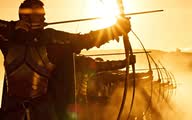
It's at 20:26.
You know it's in there. The take, the line, the page, the photo with the blue tiles. Type what you remember — Niravi hands you the second. Ask a question — it answers with receipts. Then cut it, cite it, ship it.
 region
Integrated Content EnvironmentEverything you've
ever made. Awake.
Developers have had one for decades: an environment that reads the code, understands it, searches it, and ships it. Your footage, photos, papers, notes and recordings got folders. Niravi is that environment for content. Every file read to the second, the page, the pixel. Every question answered from what's actually there. Every result one gesture from the edit, the paper, the post.
the red dress · the wide shot at dusk · the invoice that says 4,180
Type what you remember.
Words, meaning or picture — Niravi matches on all three and tells you which. Drop a photo to find its cousins. Say it out loud. Every hit carries every other moment in that file as a chip, so the second best take is one click away. Two copies of the same render count once.
And when nothing's there, it says nothing here — with the number it didn't clear — instead of a confident wrong answer.
what did the court actually do, and when
Ask. Get receipts.
Pick any model — one running on your Mac, or OpenAI, Anthropic, Gemini, Grok, Azure. It reads what Niravi found, with the words around it, then uses Niravi's own tools: searches again, follows the relation graph, opens a file. Every sentence cites a place you can click.
Ask for a summary, an outline, quotes with sources, flashcards, a shot list, caption ideas. Or ask again — it remembers what you were looking at.
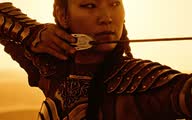 10:39 – 0:43
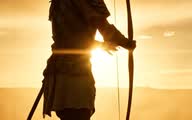 20:27 – 0:31
the take where she laughs · ⌘I · ⌘O
Cut it here.
Keep the moments that matter. Trim each to the second from the playhead. Put them in your order, a note on each. Then export a folder your editor opens before lunch: clips trimmed and numbered, captions on the cut's clock, a rough cut, a contact sheet, an FCPXML and an EDL. Or a page a client opens with nothing installed.
everything like these three — and keep it filled
Collections that fill themselves.
Pick a few places as seeds. Say which likenesses count — look alike, same sitting, share rare terms, same people — and how close. Niravi walks the graph and keeps the collection filled as new files land. Pin what stays, exclude what doesn't and its relatives. Edit it as a network. Search inside it. Freeze it when it ships.
everything with Mia in it
Name a face once.
Faces are clustered on your Mac. Name one — every appearance across years and drives becomes a row in the sidebar. Places and objects, the same. New material files itself. You never sort a folder again.


Plays with your tools.
Export an FCPXML on each source's own frame rate, and an EDL. Your selects arrive as a timeline, not a list.
Copy a place as Markdown, a citation or BibTeX. The arrow:// link opens the second or the page a month later.
Flashcards leave as a TSV. Clips leave numbered and trimmed, ready to AirDrop.
The same tools Nira uses — search, related, read, deliver — served over MCP. Your library, on their table.
Local, OpenAI, Anthropic, Gemini, Grok, Azure. Keys stay in your Keychain. A preview shows exactly what would be sent, before it goes.
⌘K search · ⌘I ⌘O trim · ⌘/ every action Niravi has, by name, with where it lives.
Every cut, every version.
Every trim, swap and render is a commit in a git repository on your Mac. Name a revision, go back to any, fork from the third. Nothing is ever overwritten — and any git log can read it.
A cut is plain JSON you can open, diff and hand to anything that renders. The document decides what; the renderer decides how.
MP4 and MOV clips, a rough cut, an FCPXML, an EDL, SRT captions, a contact sheet — numbered, trimmed, in one folder.
You and the assistant change the same document. A change made from a stale copy is refused and shown the newer one. Nobody's work disappears.
Each is a new revision that says what it did. Undo steps over a render to the change before it; a fork carries the shared past and goes its own way.
A second render lands next to the first — “cars 2” — and the history says which revision each one came from. Which one did I send them? It is written down.
Made for the ones
who make.
Type what you'd actually type.
Forty hours across three shoots, proxies and send-copies. Niravi finds the take, folds the twins, trims to the second and hands your editor an FCPXML.
Fifteen thousand clips on a phone. By face, by place, by sitting. Numbered clips for the phone, five caption hooks — and it remembers what you already posted.
Two hundred PDFs, thirty interviews, your own notes. Page 14, with the path, as BibTeX — and a link that opens the page from Obsidian a month later.
Nothing leaves.
Your files are never copied, never edited, never uploaded. The only thing that ever goes online is the model you choose to ask — if you choose one.
Everything runs on your Mac. No cloud, no account, no telemetry.
Niravi stores a path and what it read. Your originals stay exactly where and what they were.
Two folders in Application Support — what Niravi read, and the models it read with. Exports are plain files. Trash them and it's gone.

Get Niravi.
Download, drag to Applications, point it at a folder. It reads everything while the Mac is idle and keeps up forever after. Then type what you remember — and hit it.